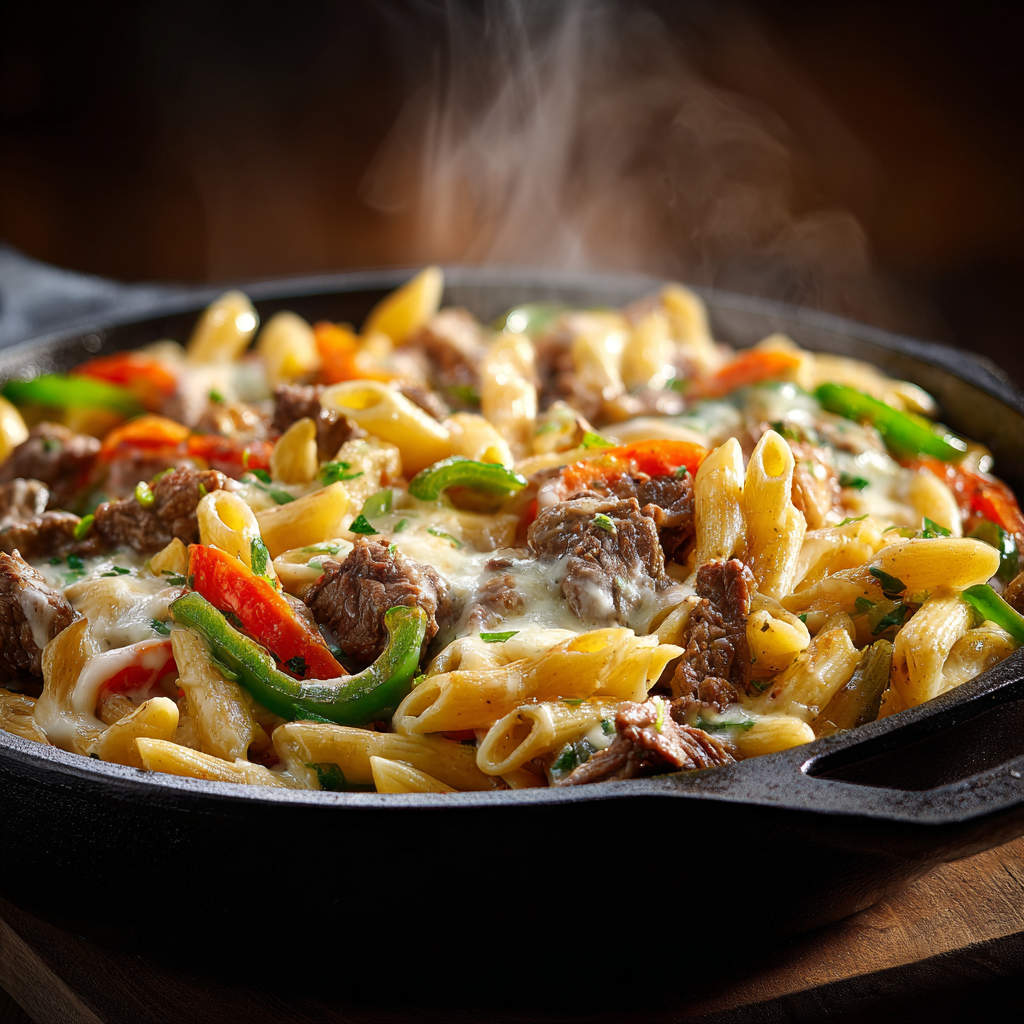
There’s something magical about a one-pot pasta dish that brings comfort, flavor, and convenience together in the same bowl—and Philly Cheesesteak Pasta is exactly that kind of recipe. It takes everything people love about the classic Philly cheesesteak sandwich—tender beef, caramelized onions, peppers, creamy cheese—and transforms it into a warm, comforting pasta dinner that feels both familiar and exciting. It’s the kind of meal you turn to on busy weeknights, cold evenings, or anytime you want something hearty without spending hours in the kitchen.
What makes this pasta dish so special is the way it balances rich, cheesy flavor with simple everyday ingredients. Instead of being heavy or complicated, it feels comforting and satisfying, like something you’d get from a cozy home-style restaurant. The pasta absorbs all the savory flavors from the beef and vegetables, and the creamy sauce coats every bite beautifully. It’s indulgent without being overwhelming, and simple without ever feeling boring.
More breakfast ideas you’ll love
Another reason this recipe is so loved is how forgiving and customizable it is. If you’ve ever wished your cheesesteak had more cheese, or more onions, or a little kick of spice—this pasta makes it possible. You can adjust everything exactly to your taste. You can even swap ingredients based on what you already have: ground beef or shaved steak, penne or rotini, provolone or mozzarella. Everything works.
Most importantly, this dish brings a sense of comfort that feels earned after a long day. It’s the kind of meal that fills the kitchen with a warm, savory aroma and gets everyone asking, “Is it ready yet?” It invites people to gather, sit down, and enjoy something delicious together—a reminder that homemade food doesn’t need to be complicated to feel special.
If you’re looking for a satisfying, crowd-pleasing dinner that comes together easily, this Philly Cheesesteak Pasta will quickly become a go-to recipe in your kitchen.
Why You’ll Love This Philly Cheesesteak Pasta
Philly cheesesteak pasta isn’t just a creative twist on a classic sandwich—it’s an elevated comfort dish that brings together the heartiness of beef, the sweetness of sautéed onions and peppers, and the silky richness of melted cheese. Every bite delivers a warm, savory experience that feels both nostalgic and modern at the same time.
This recipe stands out because it’s simple, fast, and deeply flavorful. Many pasta dishes rely entirely on the sauce for flavor, but here, the meat and vegetables create a rich, aromatic base that infuses the entire pot. When the pasta cooks directly in the broth, it absorbs all that goodness and becomes incredibly tender and flavorful—no bland noodles here.
Another thing home cooks love is how customizable the dish is. Prefer shaved steak instead of ground beef? Go for it. Want it spicy? Add jalapeños or crushed red pepper flakes. Need something extra creamy? Increase the cheese or add a splash of heavy cream. This recipe adapts beautifully to whatever your family enjoys.
Finally, it’s a true crowd-pleaser—kids love it, adults love it, and it reheats wonderfully. It’s the kind of recipe you make once and instantly add to your weeknight rotation because it checks every box: fast, comforting, budget-friendly, and absolutely delicious.
Ingredients & Best Tips for Choosing Them
Even though this dish feels indulgent, the ingredient list is simple and accessible. Here’s what you’ll need and how to get the best flavor out of each component:
Ground Beef or Shaved Steak
-
Ground beef is convenient and easy to brown, making it great for quick dinners.
-
Shaved ribeye or sirloin gives the dish a more authentic cheesesteak feel.
Tip: Choose higher-fat beef (80/20) for extra flavor—drain excess grease if needed.
Onions & Bell Peppers
These two ingredients bring sweetness and depth, balancing the richness of the meat and cheese.
Tip: Slice them thin so they melt into the sauce rather than staying crunchy.
Garlic
Garlic adds warmth and depth. Fresh cloves work best, but garlic powder can be added for extra flavor.
Beef Broth
This is where the pasta absorbs flavor.
Tip: Use low-sodium broth so you can adjust seasoning later without oversalting.
Pasta
Short shapes work best—penne, rotini, shells, or rigatoni.
Tip: Don’t cook the pasta separately. Let it simmer in the broth for maximum flavor.
Provolone, Mozzarella, or Cream Cheese
These melt beautifully into a creamy sauce.
Tip: Combine provolone (for cheesesteak authenticity) and mozzarella (for extra creaminess).
How to Make This Pasta (Step-by-Step Guide)
1. Brown the Beef
Heat oil in a large skillet or Dutch oven. Add the ground beef or shaved steak and cook until browned, breaking it into small pieces. Drain excess fat if necessary.
2. Sauté the Vegetables
Add sliced onions and bell peppers. Let them cook until soft and fragrant—this step builds the foundation of the dish.
3. Add Garlic and Seasonings
A mix of garlic, salt, pepper, and optional spices like smoked paprika or Italian seasoning enhances the cheesesteak flavor.
4. Add the Broth and Pasta
Pour in beef broth and bring to a simmer. Add uncooked pasta and stir well to ensure nothing sticks to the bottom.
5. Simmer Until the Pasta Is Tender
Let the pasta cook directly in the broth. As it absorbs liquid, the sauce will naturally thicken.
6. Add the Cheese
Turn off the heat and stir in shredded cheese or cream cheese. It melts into a glossy, rich sauce.
7. Adjust and Serve
Taste and adjust salt, pepper, or spice level. Serve warm with extra cheese on top.
Variations You Can Try
Cheesy Upgrade
Add extra provolone or a handful of cheddar for a sharp, bold taste.
Spicy Cheesesteak Pasta
Stir in sliced jalapeños, crushed red pepper flakes, or hot sauce.
Mushroom Version
Sauté sliced mushrooms with the onions for extra depth.
Loaded Veggie Style
Add corn, peas, spinach, or zucchini—great for picky eaters.
Creamier Sauce
Add ¼ cup of heavy cream or evaporated milk for an ultra-smooth finish.
Philly Chicken Cheesesteak Pasta
Swap beef for sliced chicken breast or rotisserie chicken.
How to Store & Reheat This Dish
Storing
-
Refrigerate in an airtight container for up to 4 days.
-
Sauce may thicken—this is normal.
Reheating
-
Reheat on the stovetop with a splash of broth or milk.
-
Microwave in 30-second intervals, stirring between each.
Freezing
Not ideal because cheese sauces can separate, but you can freeze it for up to 2 months if needed.
What to Serve With Philly Cheesesteak Pasta
This meal is hearty enough to stand alone, but here are some great pairings:
-
Garlic bread or toasted rolls
-
Simple green salad
-
Roasted vegetables
-
Steamed broccoli
-
Pickles (for a fun cheesesteak-inspired touch)
A sprinkle of chopped parsley or fresh cracked pepper also makes the dish look brighter and more inviting.
Philly Cheesesteak Pasta
Ingredients
Method
- Heat olive oil in a large skillet or Dutch oven over medium-high heat.
- Add the ground beef (or shaved steak) and cook until browned. Drain excess fat if needed.
- Add sliced onions and bell peppers. Sauté for 5–7 minutes until soft and fragrant.
- Add minced garlic, salt, pepper, paprika, and Italian seasoning. Stir well.
- Pour in the beef broth and bring to a simmer.
- Add the uncooked pasta. Stir to ensure it doesn’t stick to the bottom.
- Cover and cook for 10–12 minutes, stirring occasionally, until the pasta is tender.
- Reduce heat and add shredded cheese and cream cheese. Stir until melted and creamy.
- Adjust seasonings, garnish if desired, and serve warm.
Notes
- Use low-sodium broth to control saltiness.
- Add jalapeños or chili flakes for a spicy version.
- Leftovers thicken—add a splash of broth or milk when reheating.
- Works well with chicken instead of beef.
Nutrition (Approx. per serving – 6 servings)
- Calories: 480
- Protein: 27 g
- Carbs: 39 g
- Fat: 24 g
Final Thoughts
This Philly Cheesesteak Pasta brings everything people love about the iconic sandwich into a warm, creamy, filling one-pot meal. It’s quick enough for busy weeknights but delicious enough for company. The tender pasta, savory beef, sweet peppers, and melty cheese create a comforting bowl that satisfies without requiring complicated steps or expensive ingredients.
Once you try it, it’ll quickly become one of those recipes your family asks for again and again—not just because it tastes amazing, but because it feels like home in a bowl.